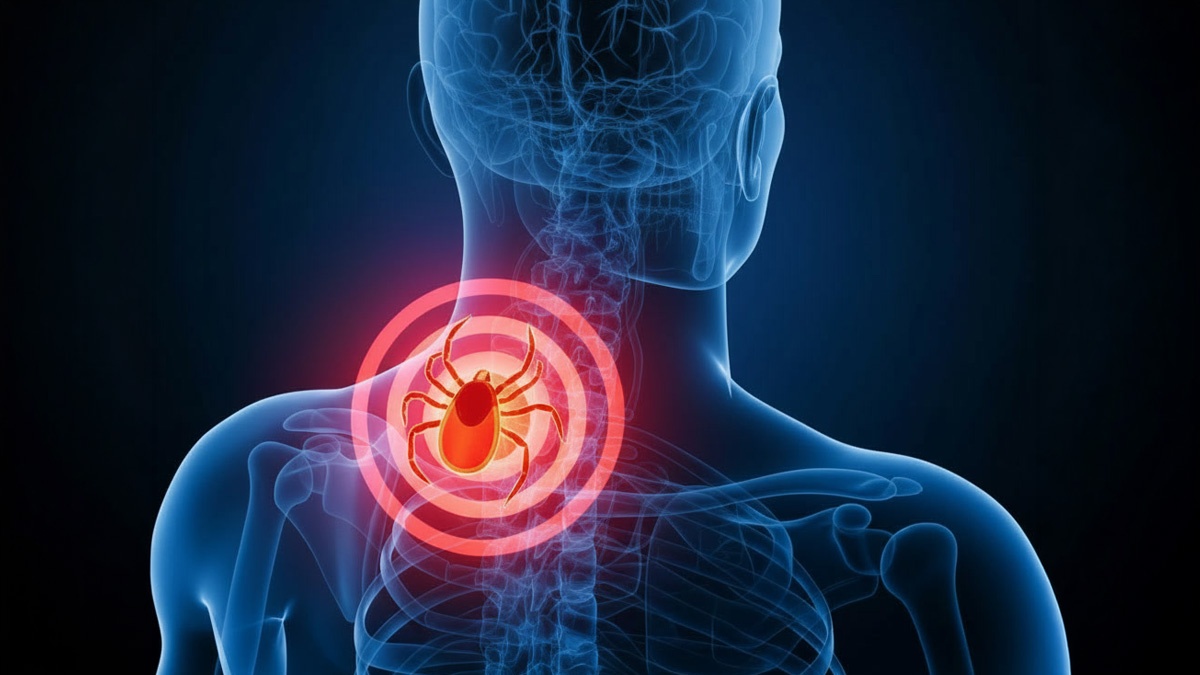
Lyme disease is an illness caused by borrelia bacteria. Humans usually get Lyme disease from the bite of a tick carrying the bacteria. Ticks that can carry borrelia bacteria live throughout most of the United States. But Lyme disease is most common in the upper Midwest and the northeastern and mid-Atlantic states. It’s also common in Europe and in south central and southeastern Canada. You’re at risk of Lyme disease if you spend time where the ticks live, such as grassy, brushy or wooded areas. Taking safety measures in these areas can lower the risk of Lyme disease.
A tick bite may look like as a tiny, itchy bump on your skin, much like a mosquito bite. This doesn’t mean you have a tick-borne disease. Many people will not notice they’ve had a tick bite. The symptoms of Lyme disease vary. They usually show up in stages. But the stages can overlap. And some people don’t have symptoms of the typical early stage.
Early symptoms of Lyme disease usually happen within 3 to 30 days after a tick bite. This stage of disease has a limited set of symptoms. This is called early localized disease.
A rash is a common sign of Lyme disease. But it doesn’t always happen. The rash is usually a single circle that slowly spreads from the site of the tick bite. It may become clear in the center and look like a target or bull’s-eye. The rash often feels warm to the touch, But it’s usually not painful or itchy. Other symptoms may include fever, headache, severe fatigue, joint stiffness, muscle aches and pains, and swollen lymph nodes. Without treatment symptoms can progress.
The best way to prevent Lyme disease is to avoid tick bites when you are outdoors.
Use tick repellents:
- Spray your outdoor clothing, shoes, tent and other camping gear with a repellent that has 0.5% permethrin. Some gear and clothing may be pre-treated with permethrin.
- Use an insect repellent registered with the Environmental Protection Agency on any exposed skin, except your face. These include repellents that contain DEET, picaridin, IR3535, oil of lemon eucalyptus (OLE), para-menthane-diol (PMD) or 2-undecanone.
- Do not use products with OLE or PMD on children under age 3.
Dress for protection
- Wear light-colored clothing that makes it easier for you or others to see ticks on your clothing.
- Avoid open-toed shoes or sandals.
- Wear long-sleeved shirts tucked into your pants.
- Wear long pants tucked into your socks.
Check for ticks:
- Shower as soon as possible to wash off any loose ticks. Check for ticks that may have burrowed.
- Use a mirror to check your body well. Pay attention to your underarms, hair and hairline. Also check your ears, waist, and the area between your legs, behind your knees, and inside your bellybutton.
- Check your gear. Before you wash your outdoor clothes, put them in the dryer on hot for at least 10 minutes to kill ticks.
If you live where Lyme disease is common, the rash might be enough for a diagnosis. A diagnosis usually depends on the following:
- A review of all signs and symptoms.
- A history of known or possible exposure to ticks.
- Blood tests to find disease-fighting antibodies to the bacteria.
Antibiotics are used to treat Lyme disease.