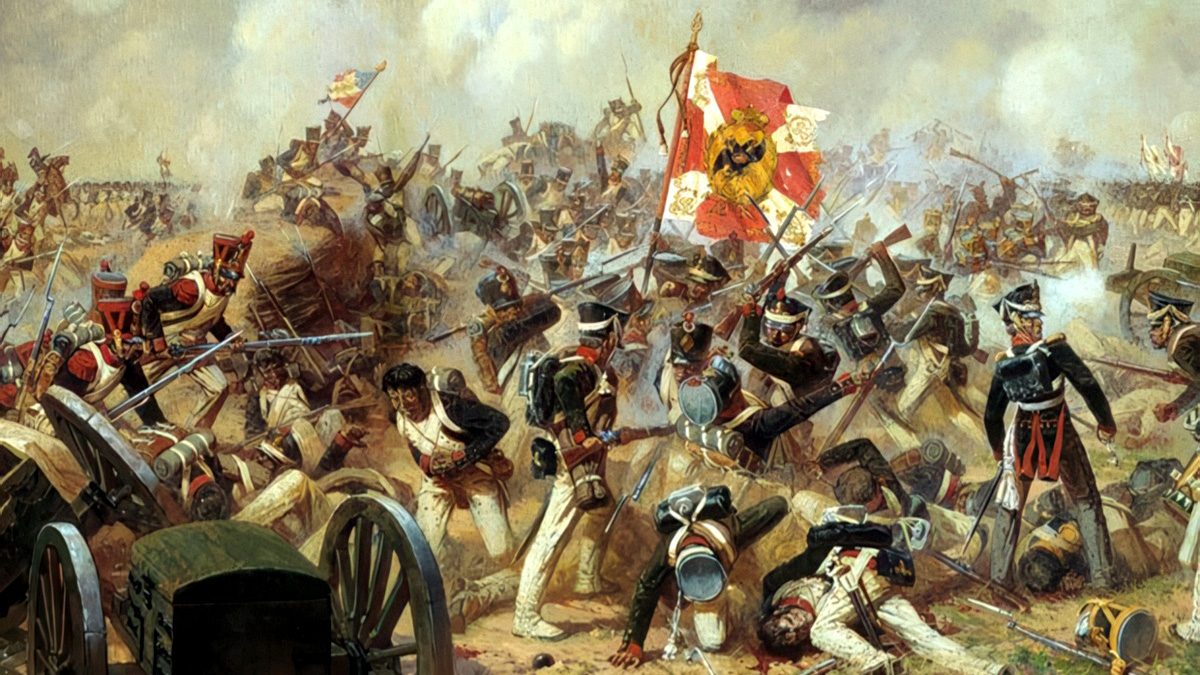
The 1812 Overture was composed by Pyotr Ilyich Tchaikovsky in 1880 to commemorate Russia’s successful defense against Napoleon’s invading armies in 1812. It debuted in Moscow near the yet unfinished Christ the Savior Cathedral (being erected to also commemorate Napoleon’s defeat) on August 20 of that year. Its’ phenomenal, well-known score originally shocked the masses because it was so loud and robust, even incorporating actual volleys of cannon fire!
The overture begins with the simple, plaintive melody of the Orthodox Church’s Troparion of the Cross (“O Lord, Save Thy People…”) played by four cellos and two violas, and represents the Russian people, gathering in churches, praying and imploring God to protect them from the invading forces.
Then, the “La Marseillaise” (French National Anthem) is heard, representing the advancement of the French forces. At this point the La Marseillaise is heard competing with various Russian folk music, symbolizing the two armies fighting each other as the French advance towards Moscow.
At this point, five cannon shots are heard, representing the Battle of Borodino. This is where the La Marseillaise is most prominent as the French seem to be winning. After this, a long descending run representing a turn in fortune as the French army retreats out of Moscow. Strains of the opening sequence (“O Lord, Save Thy People…”) are again heard both, as a prayer of thanksgiving to God and a hymn of victory. The grand finale culminates in eleven more cannon shots and the rousing melody of “God save the Tsar!”