Charles Dickens wrote extensively, but he is perhaps best known for his classic novel, “A Tale of Two Cities,” which juxtaposes the divergences of London’s stability with the chaos of Paris during the French Revolution.
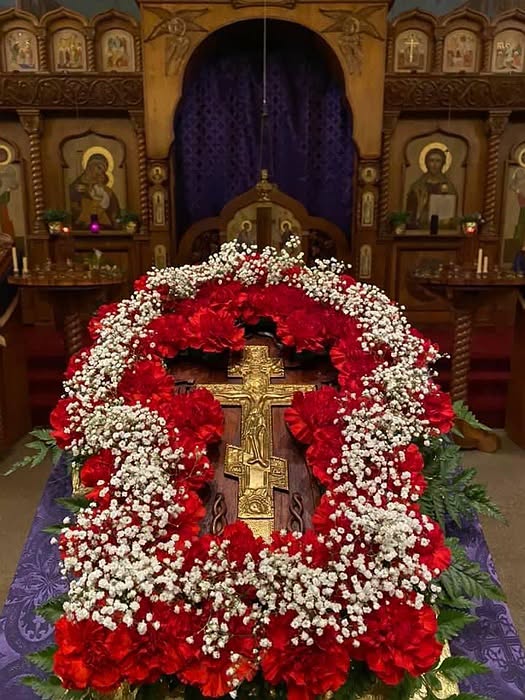
Borrowing that title as a basis for analogy, we could easily categorize the Old and New Testaments as being “A Tale of Two Trees:” the Tree of Knowledge of Good and Evil in the Garden of Eden and the “Tree” or wood of the Cross that our Lord was crucified on; each tree revealing distinct correlations, symbolism, and even a foreshadowing from one to the other.
Life was perfect in the Garden of Eden, but when man chose to disobey God and ate the fruit of the forbidden tree, he was expelled and death was loosed upon the earth. Conversely, amidst the sinful and evil world, our Lord’s crucifixion became redemptive; the Tree of Life restoring life and mending the broken, fractured relationship between God and man.
After the fall, Adam and Eve were “exposed” and ashamed by their nakedness. At His crucifixion Christ was stripped of His clothing, enduring shame and hanging naked upon the Cross, so that we might be “clothed” in a robe of righteousness (Gal. 3:27) and garment of salvation.
When man was cast out of the Garden, he had to make his living “by the sweat of his brow” upon land that now produced thorns and thistles. During His Passion Jesus wore a crown of thorns as a symbol of victory in overturning man’s curse.
Eve’s taste of the “apple” brought a curse of death, while Christ’s last meal with His disciples and the institution of the Eucharist inverted this and providing the sustenance of life-everlasting.
The Tree in the Garden was the site death was inaugurated, while the place where Christ was crucified – Golgotha (the Place of the Skull) – is where it was restored.
Man gave into temptation to eat the fruit of the Tree to gain knowledge and wisdom “apart from God,” while the Cross of Christ is called “the wisdom of God” (1 Cor. 1:24) in which man gains true knowledge.
Thus, the fall of Adam through the forbidden tree is contrasted with the victory of the Christ – the New Adam – who through His sacrifice overturns the curse.
Adam defied God; Christ obeyed, surrendering Himself as a sacrificial lamb.
For every action there is a reaction. Therefore, the sin of eating from the Tree of Knowledge produced judgment, whereas our Lord’s voluntary surrender and sacrifice created justice.
Keep in mind that we have a duty and an obligation to the Cross; to live by, follow, and promote the Cross. For the Cross of Christ is not simply our inheritance, but the inheritance of a responsibility; a great, awesome, vital, and important responsibility to pass along our Faith, “paying it forward.” Because if we shuck this important responsibility and apostolic ministry, and do not pass it along for the salvation of future generations, who will???