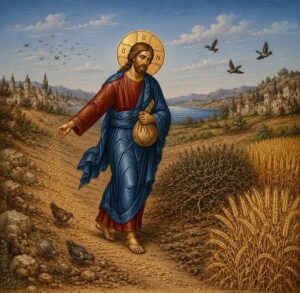
Our Lord often employed familiar, day-to-day imagery like fishing, shepherding, and farming to help illustrate his teachings, and the apostles and leaders of the Early Church followed suit, peppering their teachings, preaching, and letters with the same. Sadly, however, some of these conceptual expressions, like “plowing in hope,” found in this morning’s epistle resonated much more acutely to those people than it does with us today.
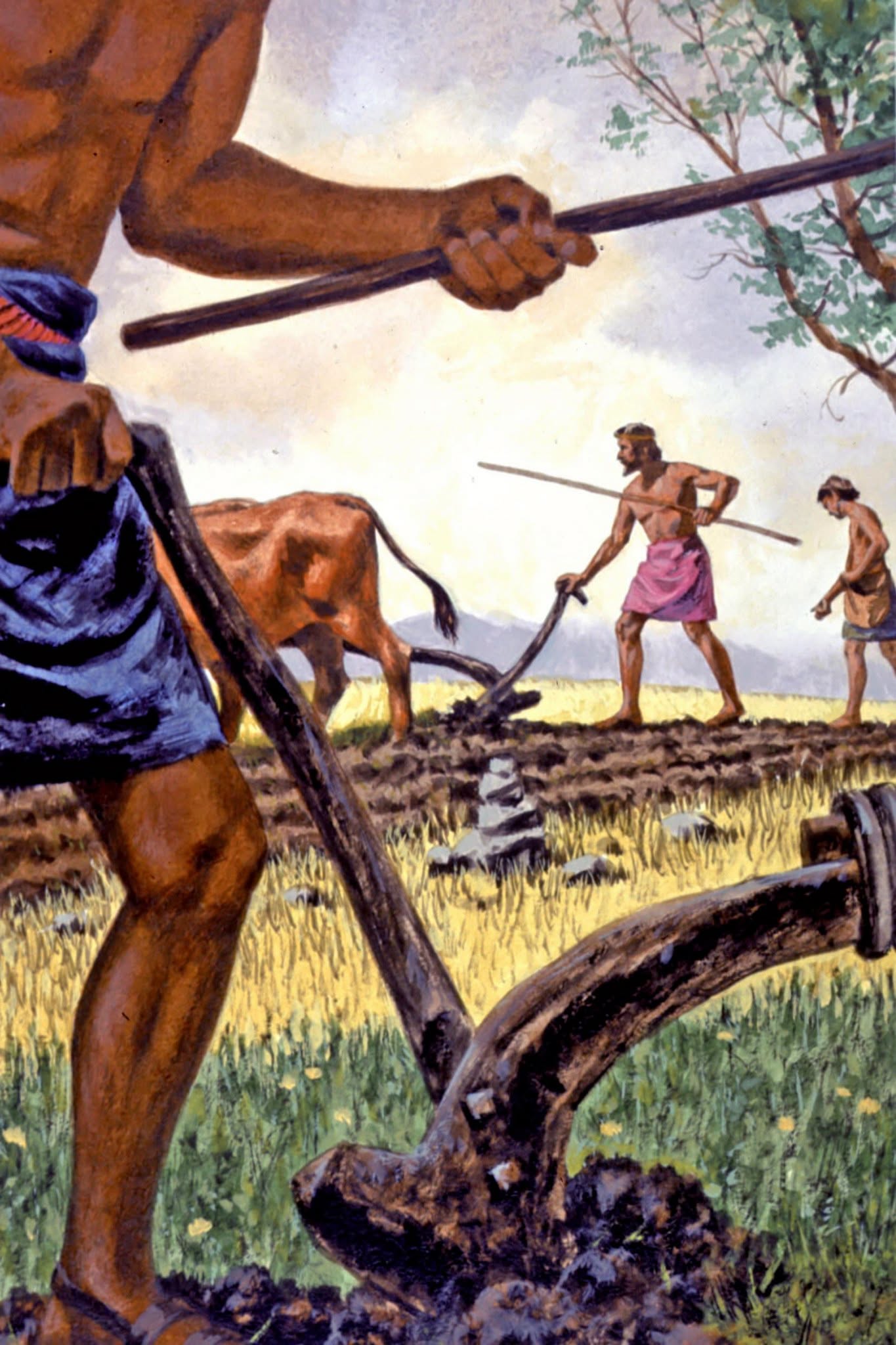
In those days, everyone understood the effort it took to plow a field. It was difficult, backbreaking labor, even if oxen were helping pull the plow; and not only that, but tilling the earth held no guarantee of a bountiful crop or harvest. The farmer was taking a risk, but he “plowed in hope.”
Hope is another word which has changed over time, and many do not fully grasp its original meaning. We talk of “hope,” “having hope,” and “hope in Christ,” but today’s definition differs from its ancient roots. Our usage of hope is often underscored by uncertainty. It carries with it an element of doubt: “I hope I graduate,” “I hope it doesn’t rain,” “I hope Fr. John will give a longer sermon this morning.” Our modern interpretation is nuanced with uncertainty; it is not definitive.
In Hebrew, the word for hope, batah, means having full confidence and assuredness that something will occur without any doubt; and the Greek word used in the New Testament, elpis, also suggests complete trust and expectations without doubt. Therefore, it is this kind of hope – Biblical hope – that should be the foundation of our Faith. It is the difference between confidently saying, “The Lord is my hope,” as opposed to, “The Lord is my hope???”