The ancient Greek philosopher, Plutarch, once said, “We do not sit at the table to eat, but to eat and share a meal together.” This is because the table is where we both sustain and celebrate life. It is where families reaffirm their relationship, where strangers become friends, and where friends forge greater bonds.
There is something about eating and drinking that innately joins us together. Sharing meals involves preparation, participation, and reception. This experience is universal among all cultures and is how families and friends share life together. In sharing food, they share time, conversation, dreams, plans, and celebrations (birthdays, anniversaries, name days, and victories or accomplishments) as well as grief, sadness, and moral defeats.
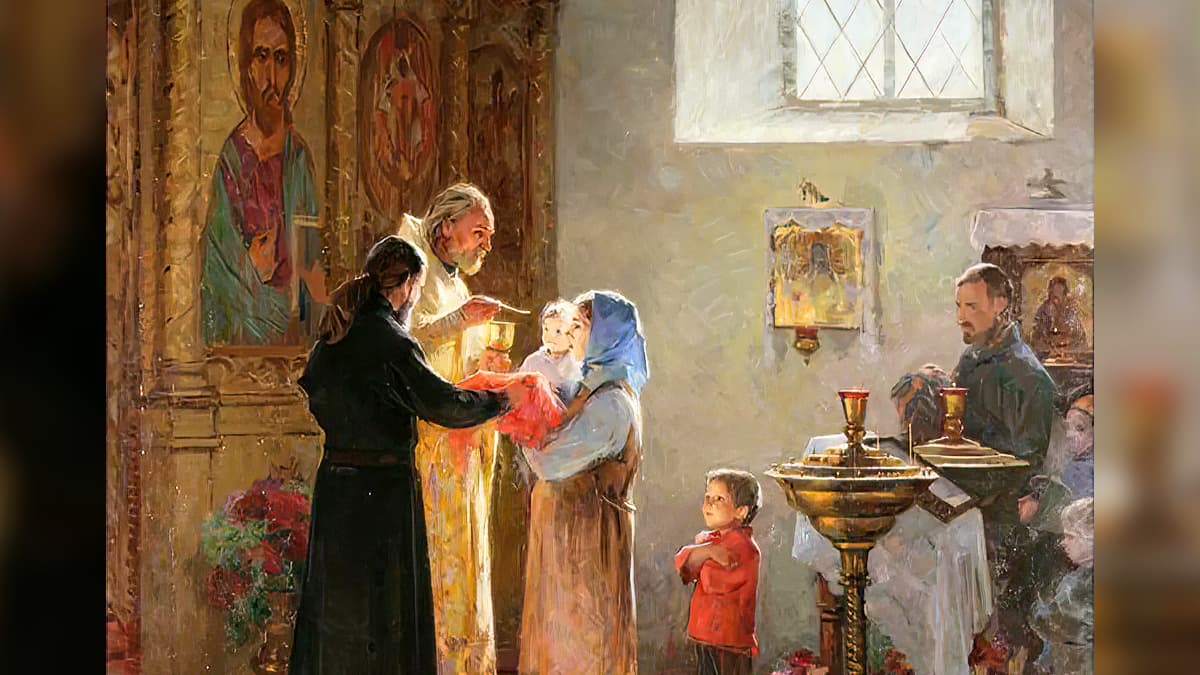
Yet, sharing meals goes far deeper than physical and emotional nourishment; gathering around the table and eating together generates oneness, wholeness, and fullness. The experience of eating and drinking has always been an intimate act, and this is undoubtedly why Christ instituted and patterned His model of ideal worship as a simple meal: The Eucharist (the Body and Blood of Christ; Holy Communion).
For we, too, gather around a table, the Holy Altar, where we offer the gifts of bread and wine unto God, who then transforms them into His life-giving and life-sustaining Body and Blood. And it is through receiving His Body and Blood, this “holy meal,” that unites us, as communicants, with God and to each other. This sacrament allows us to be given, fed, and consume spiritual nourishment by God in Heaven in a way that mortal man can relate to, through sharing a meal of food and drink.